Annihilation of Nature

“The main purpose of this piece is to bring to light the many animal extinctions taking place on Earth.”

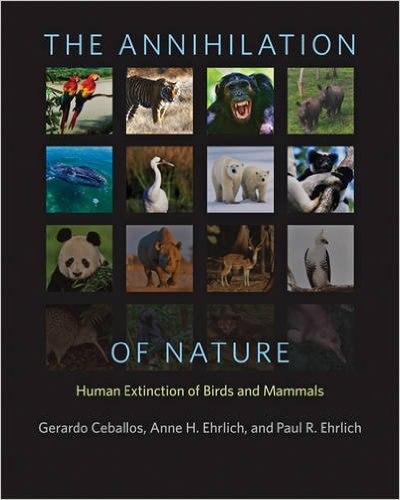
First, the authors set the scene by describing Earth’s relationship with the universe and then illustrating the history of life on Earth, dating back to one billion years ago. They provide a brief history of humans (Homo sapiens), which especially focuses on the different industrialization eras that took place around the world. Eventually, the book catches up51603hN9yuL._SX398_BO1,204,203,200_ to the present as they contemplate the extinction of modern animals. After spending much time analyzing the extinction of many birds and mammals, the autho
rs discuss the significance of these extinctions. The main purpose of this piece is to bring to light the many animal extinctions taking place on Earth. A handful of solutions are proposed in the final pages of the book.

Several different literary (as well as visual) techniques were used throughout the book, some good, others less effective. Most notably, there were over one hundred photos of wildlife included in the book. The pictures carried great significance and made the text more powerful. However, the few pages that were without any photos were nearly unbearable, as the large chunks of text were quite overwhelming. Even so, the book included important facts on animal extinction when necessary, which proved to be effective. Furthermore, the description of wildlife tragedies were especially influential For example: In [the whale’s] stomach it had a golf ball, surgical gloves, duct tape, miscellaneous plastic fragments, a pair of sweatpants, and twenty plastic bags, among other trash. Plastic cannot be digested and simply clogs the gut, causing death not directly but indirectly, through starvation and disease.” (83) This graphic description leaves readers with a vivid, powerful image and a lasting impression. On another note, I began to notice awkward wording in a handful of instances. For example, the author refers to the Bonobo species as “our sexy living relatives.” Additionally, sometimes the authors seemed to demonize the human race as a whole, rather than pointing out a specific group responsible for poor environmentally sound decisions. Ultimately, the authors make powerful use of certain techniques to illustrate the sad stories of extinction throughout history.

This piece was certainly successful in providing readers with an above average understanding of bird and mammal extinction. I learned many different things, ranging from the importance of biodiversity in the Amazon rainforest to the illegal hunting of elephants for the ivory trade. The use of photography amidst well-written, evocative text throughout the book created an inviting environment to learn and sympathize.

#1541: Annihilation of Nature

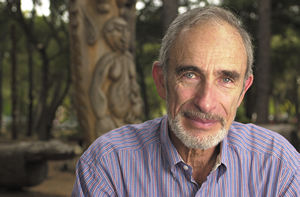
Ehrlich2_300-stanford-tmsogOur guest this week is Dr. Paul Ehrlich, Professor of Population Studies at Stanford University, whose famous book, The Population Bomb, remains controversial to this day. His current work is titled ANNIHILATION OF NATURE: Human Extinction of Birds and Mammals, which discusses the loss of species due to human activity, and the importance of biodiversity and empathy in helping solve problems of habitat loss, and the effects of climate change as it relates to all Earthlings. We are in the Sixth Extinction, and it is time for humans to use their emotional cues to protect Mother Earth. For more information go to ccb.stanford.edu (Center for Conservation Biology) and his book is available via amazon.com. You can send him a tweet @PaulREhrlich


[soundcloud url=”https://api.soundcloud.com/tracks/239141386″ params=”color=ff5500&auto_play=false&hide_related=false&show_comments=true&show_user=true&show_reposts=false” width=”100%” height=”166″ iframe=”true” /]

What the Climate Accord Means at Home

By Susan Lutz

treaty-paris-UN
Photo by UN.org

With the agreement of a landmark accord reached between 196 nations to reduce greenhouse gas emissions and commit to truly working towards change, the planet has a chance to survive. We have a shot at making it.

Something happened when I heard the news of the accord. I didn’t rush to look up all the details of the agreement. Instead of wondering about the facts, I felt a sense of peace. It was as if what we do on the local level and in our homes really does matter. When nations all over the globe decided to finally get to work on these issues, get our priorities straightened out, and look the problem in the eye, it made the daily tasks I do in my home actually feel like they make a difference.

If the nations had fought to no avail, looked the other way, or ignored the problem, and gone home without an agreement, I think all of us would have felt a little differently. Perhaps in a subtle way, we might have stopped working so hard. We might have lost hope. It is hard to fight such a large battle without the unity of nations and without leadership at the highest levels.

Now, I can look again at my habits that help curb waste, lower greenhouse gases, and bring stability and life into our existence. Sorting out trash and recycling, and using that glass bottle over and over again, doesn’t seem like wasted effort. Taking the bus or carpooling feels like a good choice. Buying less stuff finally feels like it adds up to a real solution.

With acknowledgement at the highest levels, we can now look optimistically towards our future. It’s time to look into new ways to lower my impact on the planet. None of this change is easy, but we’ve spent too much time taking the easy way out. There’s something we can do every day to change things for the better.

Now that the big players are part of the game, we have a chance at winning.

WECAN: Women’s Earth & Climate Action Network

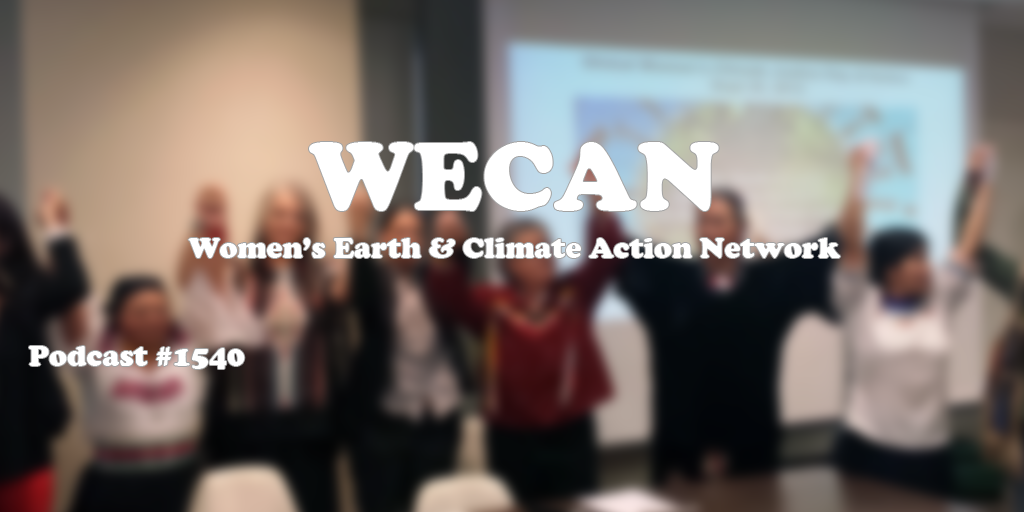
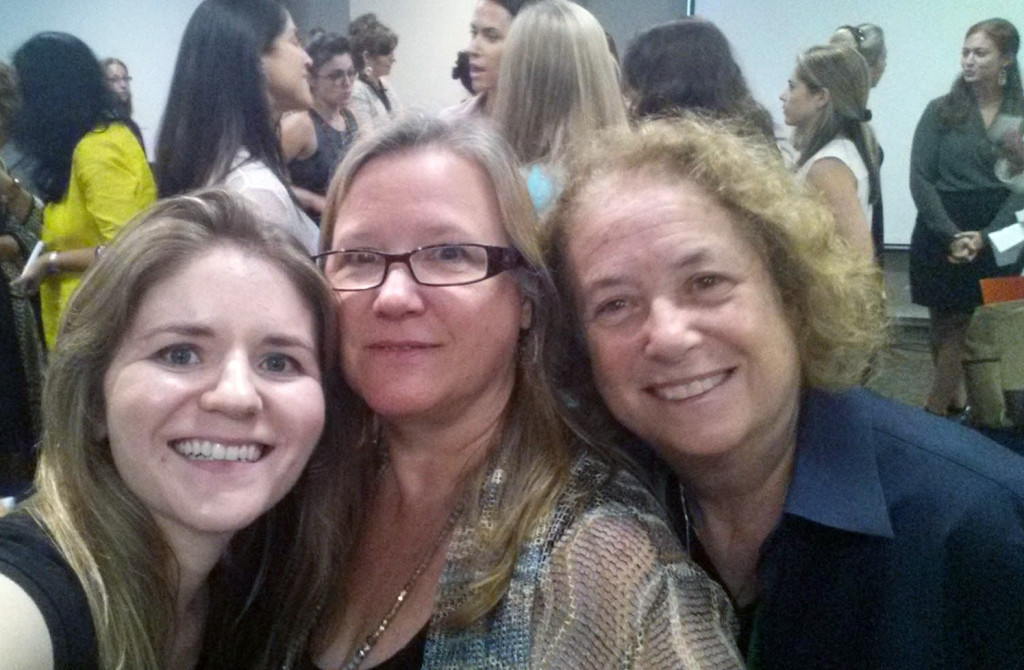
Maxine-Abba-Meg_2This weeks episode takes us to the Global Women’s Climate Justice Day of Action at the UN, sponsored by the Women’s Earth and Climate Action Network (WECAN). This event was attended by women from over 50 countries. To have such a collection of amazing women in one place, who presented stories of courage and resilience in combating climate change was deeply touching. Women play a key role in adapting solutions to climate change, and it was an honor to speak with WECAN founder Osprey Lake, environmentalist visionary Sally Ranney, as well as Neha Misra founder of Solar Sister, Harriet Shugarman Executive Director of ClimateMama, Executive Director of CELF Katie Ginsberg and student Coreena, and Patricia Gualinga-Montalvo, Indigenous Leader of Ecuador, whose interview was translated by Amazon Watch’s Executive Director Leila Salazar-López. For more information visit wecaninternational.org

 

[soundcloud url=”https://api.soundcloud.com/tracks/237134561″ params=”color=ff5500&auto_play=false&hide_related=false&show_comments=true&show_user=true&show_reposts=false” width=”100%” height=”166″ iframe=”true” /]

We’re Melting

By Susan Lutz

Forests are dying. Polar bears starving, ice caps shrinking. The list grows. We’ve spent a lifetime stomping on the planet and now world leaders gather in the hopes of finding a solution before we hit the tipping point. Can we pull back? Can we save ourselves?

I read positive stories: a community garden in Haiti becomes a center of growth and revitalization; the price of solar power is dropping fast and becoming an extremely viable alternative energy source; climate adapted strategies are manifesting and working to stabilize wildlife. Around towns, I see trees being planted, youth conversing about important issues. This is great. And there are many more examples of success and ideas which are moving us forward.

Yet, I read bad news, too: the UK starts to cut millions of dollars from its renewable resources; the threat of disease increases due to insects gaining the ability to live longer and travel farther; the sea level is rising; and of course, we’ve all seen the pictures of the polar bears starving. Some days, it’s hard to read the news. Some days it does seem like we’re just going to tip over and sink.

I recently heard a lecture on the cause and effect of our actions and the impact our choices have on climate change. The most interesting, and most powerful, I thought, was this: What are we willing to give up? In this country, the majority of cars during rush hour consist of single drivers. Bottled water and soda fill our vending machines, and we don’t give a second thought to the short pleasure we get versus the amount of toxins in each bottle. We like our stuff. We like our creams, cars, deals online, new phones, and processed, over-packaged foods.

The summit on climate change brings together world leaders. The model of coming together to talk; understanding our differences; taking note of those suffering the most; and, moving forward with dialogue. Regardless of how difficult the task is, it is one we must implement from the highest of offices to the grass-roots level.

We wait too long to act. We wait to change gun laws until terror steps into our cafes (if even then). We wait to ban trophy hunting and poaching and watch as species become threatened and face habitat loss and even become extinct. We’re slowly melting under the take-the-money-and-run philosophy of getting what we need, now, and forgetting how it will hurt us in the future.

When my son picked up an acorn the other day, he thought it was the grandest of discoveries. I held it up and told him it was amazing. We carried it with us as if it were a piece of gold. Our food supply, our land, our water – they truly are gold. We must realize this now, or we will watch as the world melts and slowly slips away.


Deranged Poaching in Africa

The Last Savanna by Mike Bond offers many perspectives through an unusual storyline, which includes the point of views of Somali poachers, Commandos, and the animals that are hunted.

Ryan Rusiecki

The Last Savanna by Mike Bond offers many perspectives through an unusual storyline, which includes the point of views of Somali poachers, Commandos, and the animals that are hunted. Ian Macadam, a former SAS officer, is asked by one of his longtime friends to join a dangerous mission. What makes this decision hard for Macadam is that his wife, Dottie, who is a struggling alcoholic, threatens to leave for her home in London if he goes. On the other hand, his friend has saved his life more than once, which makes Macadam feel obligated to go on the life-threatening mission. After lots of personal reflection, Macadam decides to do just that.

The story is told from the perspective of two groups: the Somali poachers who are doing whatever they can to survive and a group of Commandos who are out to kill the illegal poachers. The groups see one another as the enemy. The book begins with some factual evidence and slowly progresses into a full-on narrative. At times, the story is incredibly dark as it describes the slaughtering of many animals and people. Aside from the two groups, there is a romantic subplot which focuses on Macadam and Rachel, an archaeologist and ex-lover. Mike Bond wants to educate his readers on the ongoing conflicts that exist among the African people and he does this by sharing dark moments and painting gruesome pictures.

However, at some points in the novel, it is difficult to understand what Mike Bond is trying to get across. Mike Bond  has actually worked in Africa and is therefore well-versed on the topics at hand. However, he is not an elephant nor a tiger, and he is not a Somali poacher. Because of this, some risk exists when writing from these perspectives.

The start of the novel starts out as a traditional non-fiction piece as it includes factual information about Africa. In a friendly argument between Macadam and Nehemiah, Nehemiah explains, “Ten years ago Kenya had three hundred thousand elephants. Now we have five thousand. We had five thousand rhino. Now we have a few left, in chain-link enclosures protected by guards.” (68) This evidence provides the reader with clear, concise information that is simple to understand. It allowed me to see the issues taking place in Africa. As the novel continues, Mike Bond explains the troubles of Africa in a more creative style, making it harder for the reader to understand in an objective manner. This is something that bothered me throughout most of the novel.

Mike Bond makes use of extremely powerful descriptions of feelings within the novel to get his points across. This tactic increased my interest and even left me jaw-dropped a handful of times. His word choice is very powerful. At some points it felt as if I were actually there. At the end of a hunting scene midway through the book, the narrator describes the mood as, “In the smell of cordite and powder and blood, and in the sudden silence after the shooting, Warwar felt nauseous but empty, as if he had already thrown up everything.” (106) This particular excerpt shows how Mike Bond takes emotions to the next level. Instead of bleakly saying, “felt nauseous,” he makes the mood that much more powerful, “felt nauseous but empty, as if he had already thrown up everything.” Mike Bond’s creativity with emotions persists throughout the book and makes the story much more enjoyable.

This particular novel is the most creative, artistic non-fiction piece I have read to date. Thus, it was a very interesting read. The beginning of the novel provided me with some hard facts that allowed me to understand the “facts and figures” aspect of the issues in Africa. As the novel progressed, Mike Bond shifted his style; less facts and more emotions. This provided me with an emotional understanding of the problems taking place in Africa which is just as important as the factual knowledge. “Africa is a fever. For Africa there’s no chloroquine. No matter if you leave it, it’s engraved in your blood.” (56)

COP21

michael-charles-tobias-the-many-shades-of-green

“Between its celebrations of privilege, and the angst of its reckonings, human life gathers unto itself a chaos of contradictions… If we are ceaseless tamperers, we are also from time to time unobtrusive, Though we shout, so may we whisper.” (Michael Charles Tobias, quote from his work, After Eden: History, Ecology and Conscience) My guest this week is Michael C. Tobias, President of Dancing Star Foundation, who is a global ecologist, humanitarian, explorer, author, filmmaker, educator and animal rights activist. 195 nations are set to converge in Paris, a city recently struck by incomprehensible acts of terrorism, for the COP 21 (Conference of Parties), with the hopes of reaching an agreement to to set limits on carbon emissions to reduce the detrimental effects of global warming. Rich and poor nations must gather to form partnerships to be agents of change, rather than agents of destruction. Negative ideology has to be redirected, and ethics, compassion and morality, along with science and technology must lead the way to solutions. For more information go to www.dancingstarfoundation.org

[soundcloud url=”https://api.soundcloud.com/tracks/234709653″ params=”color=ff5500&auto_play=false&hide_related=false&show_comments=true&show_user=true&show_reposts=false” width=”100%” height=”166″ iframe=”true” /]

When Communities Come Together, Certain Things Happen

By Susan Lutz

Hope seems lost. So often headlines tumble us backwards, forgetting that hope exists. But all is not lost. I found hope, and more, in these stories, these people, and these communities – each bringing rejuvenation to our environment and its communities. Moreover, it’s not just hope that these stories project. Within the actions and hearts of the people in these stories, a deep certainty resides in their power to change not only life for themselves but for others.

  • Taking Back Detroit Neighborhoods with the Power of Organic and Community – Urban depression runs through many areas of large cities. Abandoned homes often represent a dark picture of an impossible task: how to bring life back to once vital areas. This Detroit neighborhood is taking back its homes and its community by using YouTube, gardening, and the support of each other to revitalize and reclaim a neighborhood.
  • Planting Trees as a Mission – This 103-year-old woman Karnataka has planted not just one, two, or even 100 trees. Saalumarada Thimmakka, from India, has for the last 50 years planted over 400 banyan trees. But that’s not all. She also fights to get a hospital in her community.
  • Urban Garden in the Heart of NYC – In a place least expected, the Urban Garden Center sprouted, providing fresh natural food and serving the community through gatherings and education. The Urban Garden Center has forged on, despite many obstacles. Their location houses a two-block stretch of city concrete under part of the railway system. What they do inspires others to bring the beauty and revitalization of greens into city living.
  • Empowerment through Fair Trade – The success of companies will no longer be measured in dollars only. Perhaps that never was true success. Some companies achieve empowerment for their community and themselves by giving back. Alaffia is a company in Togo, Africa with a mission to invest in the community. They state that their goal is to end poverty and foster gender equality. They work on things such as educational projects, maternal health, and reforestation, to name a few.

Connecting with the community, demonstrating an organic lifestyle, and helping others through cooperation with the environment, brings forth prosperity, perhaps slowly, but surely. As the large corporations struggle with profits, they now look to the little – though giants in heart – as models for the future. The power of their certainty plants seeds of true change that will benefit all.


#1538: NY Senator Liz Krueger

liz-krueger-500How compassionate is the New York State Compassionate Care Act of 2014 legalizing the use of medical marijuana? My guest this week, New York State Senator Liz Krueger, a lead advocate for legalizing marijuana for both medicinal and also for recreational use, gives us some insight into the pros and cons of the current bill, and why it needs to be enhanced to allow coverage for more diseases. Senator Krueger has also sponsored the Fossil Fuel Divestment Act to limit the investment in oil and gas stocks in NYS pension funds. For more information go to: nysenate.gov/senators/Liz-Kruger or send a tweet @LizKrueger
[soundcloud url=”https://api.soundcloud.com/tracks/232632557″ params=”color=ff5500&auto_play=false&hide_related=false&show_comments=true&show_user=true&show_reposts=false” width=”100%” height=”166″ iframe=”true” /]

The Spirited Reader: Introduction

This blog will feature reviews of nonfiction books that focus on the environment.

By Ryan Rusiecki

Ryan attends Bard College and has strong interests in photography and environmental studies. Before Bard, he attended Horace Greeley High School and participated in the school newspaper and ran a club that screened environmental documentaries. He also interned at the Chappaqua Farmers Market which increased his interest in sustainability and allowed him to meet Maxine. With this blog he hopes to spread knowledge about our ever changing earth and encourage others to live with more sustainable habits.

Refer to his website to view his photography work.


8.1-3

8.1

7.31-9

8.1-2


Just One Word: Plastics

At times it feels we’re just doomed to suffer in the toxic choices of our every day lives.

By Susan Lutz

I snapped the glow stick. The green, fluorescent light lit the way – the kids on Halloween safer because of the glow. The plastic glass I bought for my son this summer had the Minions on it. If I put it in the freezer, it would keep the contents cold long through the summer day. At times, it feels as if everything is toxic; everything is plastic. At times it feels we’re just doomed to suffer in the toxic choices of our every day lives.

There isn’t a day that passes by that I don’t feel guilty about a dangerous, toxic, or bad-for-me product our family consumes or uses. We occasionally buy water in plastic bottles. I go to the grocery store and sometimes forget my cloth reusable bags. After a few weeks, I’m stunned at the pile of plastic bags in the corner. I dutifully recycle my paper, plastics, and metals, yet I know recycling isn’t a solution, just a band-aid to a bigger problem.

So many of our conveniences trace back to our love of plastics. I recently watched The Graduate again and was stunned by the accuracy and the irony of the iconic line said to Benjamin as he debated what to do with his future:

I want to say one word to you. Just one word…Plastics.

The benefits of plastics and many other chemically based products made in our society are far reaching. Medical, educational, and at-home use of plastics grew leaps and bounds: think bags for blood transfusions, the parts in computers, the covers on our phones, the stuff that holds pens together, the fibers in our clothes, and so on…..

How do we turn things around? Just passing the tetra boxes in the grocery store makes me sad. I wonder if it’s impossible to change the course we’re on. I can’t predict what we’ll do to our planet, and ourselves, but I can obtain peace of mind and enough good habits to overall lessen my carbon footprint and instead chip away at improving our lives and obtaining a better balance of our existence.

What if we all used plastics less than we did the day before? I reuse glass bottles as my daily water bottles when out and about. Though not perfect (they sometimes break!), I feel it’s a tiny step I want to take in reducing my own personal toxic footprint on the planet.

I forgive myself when I don’t make it – when I forget to recycle or when I buy face paint with lead in it for Halloween. (I threw it out and made a DIY face paint from zinc oxide and chlorophyll!). But more times than I fail, I succeed. I’ll remember next year how to make the green face paint. As the end of the year and the holiday rolls around, I’ll buy less. And I see wonderful strides in our community. I see vegetable trays at children’s gatherings and a lot less candy floating around. If we all bought plastic water bottles once in a while or used the same computer two extra years, we’d make a huge dent in reducing the toxicity in our environment.

Make choices knowing that they make a long, long impact on our planet. Now, there’s just one word we must think about. One word to take us to our new level: consciousness.


Science and Slaughter: Are Dissections A Waste?

Do educational institutions face a dilemma in the way animal anatomy is taught in school?

By Michael Kohlberg

Do educational institutions face a dilemma in the way animal anatomy is taught in school? Should animal dissections and vivisections be conducted in Science classes at all? LaGuardia Community College, a CUNY school, says no to cat cadavers, instead replacing them with clay models of humans. It seems, that the areas of debate, lie in 3 main ethical questions which I will describe in this article.

The first is the question of respecting animal rights as they relate to dissections and vivisections. Then comes the question, is animal experimentation necessary for understanding anatomy? In other words, do students learn best by dissecting? Are alternatives like virtual dissections comparable or even superior learning tools?  Finally, I will briefly explore broad Sustainability Issues that dissections pose to Society.

America has acknowledged the value in respecting basic animal rights as shown by the Animal Welfare Act, a Federal Act passed by Congress in 1966. In general, this reflects the idea that our Society has adopted some moral standard for respecting the rights of animals. The United States Department of Agriculture puts it best, calling the Animal Welfare Act a “minimum, accepted, standard” of animal treatment “in research, exhibition, and transport”. However, many educated animal lovers believe that this minimum standard is set too low and that not enough is done to enforce existing federal laws.

In Biology classrooms, the animal rights argument is clear. Many of us have pets and therefore very personal and emotional connections with dogs, cats, and maybe even frogs, snakes, or mice. Performing dissections and vivisections on these types of animals can pose moral dilemmas for students taking part. Studies show that many students feel a moral dilemma when taking part in animal dissections. One study, by Arnold Arluke and Frederic Hafferty, interviewed 40 Pre-Medical students about how they felt before, during, and after using a dog as a test subject in the lab. They found that prior to the experiment, there was “widespread uneasiness” regarding moral implications, but during and after, students were able to “neutralize the moral dirty-work”.

This study not only suggests that many feel innately compassionate towards animals, but it suggests that humans have the capacity to subdue that compassion and “learn” desensitization. This raises the question, what do dissections really teach students?Along with anatomy, are our educational institutions teaching humans a lack of compassion for animals? Are we prepared to change our way of thinking about animal dissections if the answer to the previous question is true?

That leads us to our next question. Do today’s students actually learn better by dissecting, or do they learn better by using technology they are familiar with already, such as the computer? Do virtual dissections and vivisections compare as as educational tools? Many students and teachers say yes and site other benefits as well. PETA (People for the Ethical Treatment of Animals) is an animal rights organization that among other things, provides practical knowledge in dissection or vivisection alternatives. Their website has a page with resources dedicated to just this subject. According to the document “Cutting Out Dissections”, studies have shown that computer-based teaching methods saved academic and nonacademic staff time … were considered to be less expensive and an effective and enjoyable mode of student learning [and] … contributed to a significant reduction in animal use” (PETA 2013).

Also, teachers in the United States have been advocating for few dissections. Ten years ago, the National Science Teachers Association (NSTA) amended its official position statement to acknowledge the educational effectiveness of non-animal teaching methods and to support teachers’ decisions to use them as complete replacements for animal dissection (NSTA 2005).

Another example of how effective non-animal anatomy learning can be is the example of LaGuardia Community College. The Cuny Newswire reported that “LaGuardia is one of the first community colleges in the nation where its students will be learning the muscles of the human body not by dissecting cat specimens but by applying clay muscles to a [human] skeletal mannequin.”

“Studying human muscles is one of the hardest and most difficult areas,” said Professor Carol Haspel, “so we are always trying to find ways, mechanisms and pedagogical techniques that assist our students in learning the basics that they need to know.  The clay models are a key factor in helping them.” (LaGuardia Community College 2011)

Animal dissections may actually pose a barrier to students’ learning. As researchers find out that more and more students are morally against dissections, the issue becomes worrying for education itself. One study done by Theodora Capaldo on the psychological effects of reluctant, obligated dissection participants indicates that “cognitive abilities may become impaired, resulting in less learning”. The study concludes that their findings, “present a compelling argument for the 100% replacement of the harmful use of animals in education.” (Capaldo 2004)

To shift gears, let’s examine some of the Economic Sustainability issues. In order to asses whether the school would be better off, the costs of dissections must logically be compared to the costs of alternatives, which could vary depending on the type and manner in which they are implemented.

Since animal specimens are expensive for many Biology Departments, we might ask the question will a school that bans dissections and vivisections all together be better off financially? To make sense of this question let’s use a real life example. One specimen retailer, Bio Corporation, sells a class set of 15 cat corpses for $373. Theoretically, if you have 20 lab classes per semester at a University and replace specimens each semester, the cost would be $7,460 per semester on cats alone. That number does not even include any auxiliary equipment, like proper protection, tools, et cetera.

PETA’s informational pamphlet entitled, “ Animal Dissection and Interactive Anatomy Software” factors in many of the auxiliary costs which they total at an additional $759 per five year period accounting for 30 students. In the event that a school keeps their cat specimens for 5 years, PETA calculates a grand total of $3906.05 for a class of 30 students. In the same article, PETA compares the costs of virtual cat dissection, which amounts to $800 per 5 year period of 30 students. Obviously, a university like Brooklyn College has a much higher dissecting student body than 30, so the costs would be significantly higher.

From the data found, it seems that the long run economic viability of switching from perpetual spending, (in our hypothetical example that is $7,460/ Semester) to more fixed spending like dissection software or clay molds, would be a cunning financial move for the Brooklyn College school board to consider.

In Conclusion, the economic costs associated with animal dissections that most students and faculty members might not be aware of are high. Furthermore, the documented psychological stress that many students undergo while performing obligational dissections has led psychological researchers to believe that the practice of dissections and vivisections does not promote learning(Capaldo 2004). Students and teachers have repeatedly advocated for bans on dissections and vivisections since 2005. And basic marginal benefit analysis of switching to dissection alternatives has suggested that the change would be more than cost effective.

Would it not, in theory at least, be more practical, for all, to ban dissections all together?