
When I asked Charlotte Ghiorse our guest on this episode of The Many Shades of Green the standard opening question:
Quel ton de vert préférez-vous? (What’s your shade of green/ what shade of green do you prefer?)
She answered “Vert Caca d’oie” (Goose poop green)
Charlotte was in France at the time of the taping, so we got slightly carried away with the what’s your shade of green question. Both Paris and Ithaca have been in the news of late, as both cities have put green initiatives into place to reduce their carbon emissions. In Ithaca, the city is focused on eliminating gas from buildings because as stated in eartheasy.com, homes in the United States are responsible for about 20% of the country’s greenhouse gas emissions annually. These emissions come directly from burning fossil fuels such as coal, oil, fracked gas and gasoline. Shifting your home energy towards cleaner alternatives is a critical component to slashing emissions and creating a healthier future, as natural gas is mostly methane, a potent greenhouse gas with more climate-warming particles. The goal then is to switch buildings to electricity that’s generated mostly from renewable electricity. Heat pumps and geothermal energy are being used as alternatives to gas. Ithaca is working with their electric utility NYSEG, and using incentives to make the gas to electric switch happen.
On the other side of the pond, Paris is working to make the city more resilient and has added more bike lanes and green space. The air quality is not great and the Seine is polluted, but Paris has a plan. The city is preparing for the 2024 Summer Olympics and is working hard to have the various sites be more sustainable. The Mayor of Paris, Anne Hidalgo, has placed green policies at the forefront of her campaigns, and she has plans to plant four new ‘urban forests’ next to major landmarks including the Hôtel de Ville, the Gare de Lyon and the Opéra Garnier. Hidalgo told The New York Times that one of her major goals is to “build this city around the individual” using the “15 minute city” model proposed by Carlos Moreno, a professor at the city’s Sorbonne University. In this model of the city, residents would have access to all basic services (public transport, shops, schools) within a quarter-hour of their home. One simple way to do that, is to put nature back into urban life. I was in Paris at the Eiffel Tower last November and I saw the work being done on the new park surrounding the landmark, and it is going to be beautiful. As mentioned, an area of concern now is the pollution in the Seine. Many Olympic water events are going to take place on and in the river, so something needs to be done quite quickly to resolve this issue, as the controversy surrounding the quality of the water is in the forefront. With that aside, Paris is making headway to be cleaner and greener. By 2030, the most famous street in Paris, the Champs-Élysées, will be turned into an ‘extraordinary garden’ as part of a massive €250 million makeover. The plans include reducing the number of car lanes from four to two, creating new pedestrian and green areas, and planting ‘tree tunnels’ that improve air quality along the 1.9km-long avenue. Joni Mitchell will be happy to hear that news, as her tune Free Man in Paris originally released in 1974, has her wandering down the Champs-Elysees, which will soon look quite different, and will be environmentally friendly.
Our resident artist, eco-activist and astrologist, Charlotte Ghiorse discusses what is happening in Ithaca and Paris to reduce greenhouse gas emissions. She also gives us some updated astrology (Uranus in conjunct with Jupiter in the 11h House), and much more. To get more info as to what Charlotte is up to go to https://www.houseofchoclet.com/ and visit Sexy Astrology on Facebook and YouTube. Check out eartheasy.com for sustainability info. For past shows go to HudsonRiverRadio.com and Malcolmpresents.com. Follow The Many Shades of Green (TMSOG) on Facebook, Instagram and Threads @tmshadesofgreen. Listen to TMSOG podcast on all major podcast apps. #RaiseYourEcoConsciousness
TMSOG is proud to be on Feedspot’s list (at # 8) of the 50 Best Environmental Podcasts to follow in 2024 https://podcasts.feedspot.com/environmental_podcasts/
 Show #1618 A powerful conversation with Kandi Mossett, of Indigenous Rising, who is literally on the front lines of one of the current battles in the climate justice fight against the Dakota Access Pipeline. There are many reasons you need to listen to Kandi and learn more about what’s at stake.
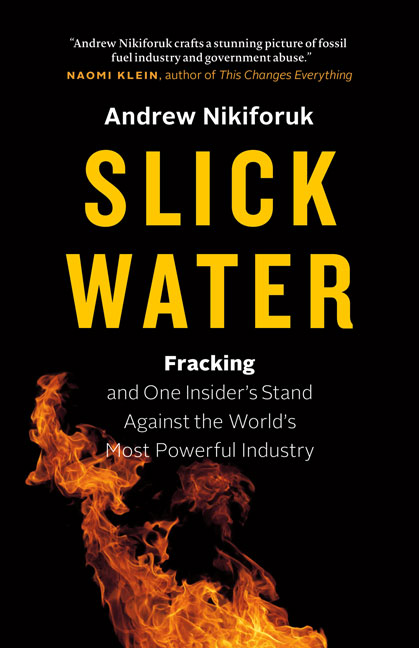 It is no secret that mainstream media coverage of environmental issues is slow-moving, and many stories go un-reported in the press. Climate change deniers spout their ideology with reckless abandon. Enter my guest this week, Andrew Nikiforuk, an award winning environmental writer based in Calgary, Canada, who has written a new book about the hydraulic fracturing industry entitled Slick Water: Fracking and One Insider’s Stand Against the World’s Most Powerful Industry. The book traces the saga of Jessica Ernst, and the path she takes to hold Encana Oil and Canada’s environmental government agencies, responsible for secretly fracking hundreds of gas wells around her home, in a rural area northeast of Calgary. A cover-up ensues, which leads Ms. Ernst to take legal action against the various parties for their role in contaminating land, water and air in her community. For more information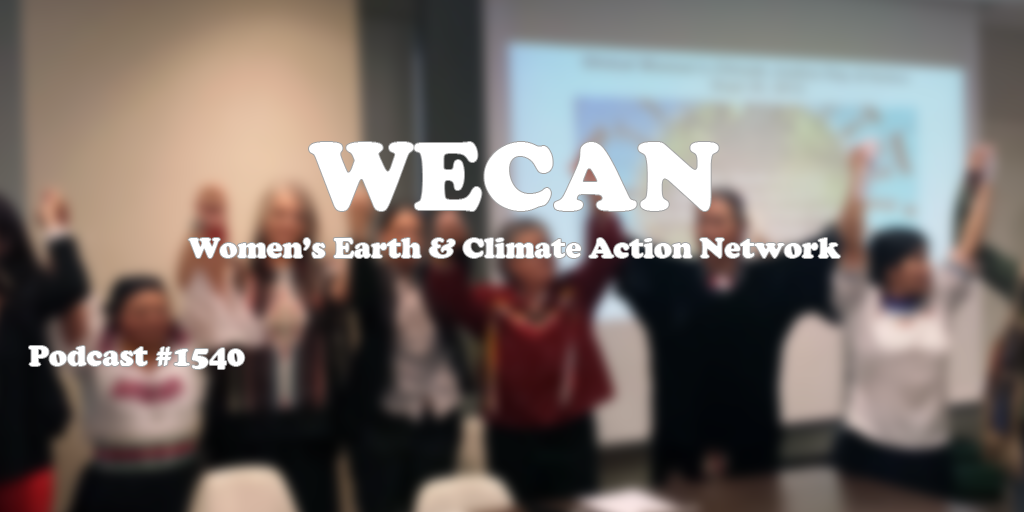
 This weeks episode takes us to the Global Women’s Climate Justice Day of Action at the UN, sponsored by the Women’s Earth and Climate Action Network (WECAN). This event was attended by women from over 50 countries. To have such a collection of amazing women in one place, who presented stories of courage and resilience in combating climate change was deeply touching. Women play a key role in adapting solutions to climate change, and it was an honor to speak with WECAN founder Osprey Lake, environmentalist visionary Sally Ranney, as well as Neha Misra founder of Solar Sister, Harriet Shugarman Executive Director of ClimateMama, Executive Director of CELF Katie Ginsberg and student Coreena, and Patricia Gualinga-Montalvo, Indigenous Leader of Ecuador, whose interview was translated by Amazon Watch’s Executive Director Leila Salazar-López. For more information visit
 Neither rain, nor fog, nor soggy dew could dampen the spirit of the Clearwater 2015 Festival. We spoke to many environmental activists and green entrepreneurs who are creating ideas, and spreading the message about the need to be proactive stewards of Mother Earth. Music echoed throughout the festival, with many performers motivating the populace to take a stand and raise their voices on environmental and social justice issues. Music icon David Crosby, sang new songs with lyrics that commented on the nation’s current state of affairs, and implored people to email, call or show up at the offices of their elected officials and make some noise. Pete Seeger would have been proud to see his vision perpetuated. For more info go to
 “We are keepers of the planet, we are protectors of the water, the land, the air.” Join me and my guest Don Raskopf, a member of the Board of Directors for Clearwater, and co-founder of Ban Fracking Now, as we delve into topics of fracking, train transportation of bakken crude oil, green building and the musical connection to Clearwater via one its founders, Pete Seeger. Music continues to be the message, as it is the force behind social movement and activism. For more information about Clearwater and the upcoming Clearwater Festival go to
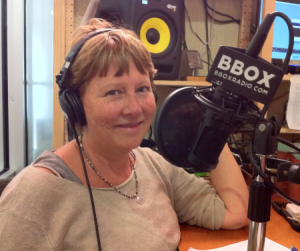 Oh, CANADUH! What’s gloopy, leaky,toxic and endangers trees, birds, humans, water, land and air? Answer: Tar Sands and the Keystone Pipeline. Dr. Susan Rubin explains why this pipeline, which runs from Alberta, Canada through the mid section of the US, ending in the refineries of Texas on the Gulf Coast, is an environmental disaster in the making. It encroaches on Native American lands, runs through the Ogallala aquifer, which is a major water supply to millions of people, and has already leaked into the Kalamazoo River, and caused damage to homes in Mayflower, AK and Colorado. DIL BIT might sound like a cartoon name, but what it is made of is no laughing matter. Tune in to find out what you can do to raise your voice to stop the Keystone project. For more information go to
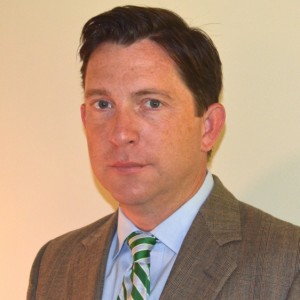 Our resident environmental legal expert, John Parker gives us a 2013 wrap up and delves into topics of hydrofracking in upstate NY, the status of the Indian Point Nuclear Power Plant, the upcoming Environmental Bond Issue, as well as what we can look for in 2014 on Eco legal issues. For more information email John at parkerjlp@gmail.com