FIRE by Bruce Springsteen
Romeo and Juliet
Samson and Delilah
You can bet
Their love they couldn’t deny
Your words say split
But your words they lie
When we kiss
Oh, fire, Fire
So to go back a bit before Romeo and Juliet, the discovery of fire dates back to prehistoric times, when Homo erectus inhabited the Earth. The earliest evidence of controlled fire use is at least one million years old. The oldest unequivocal evidence of fire use is from Qesem Cave in Israel, which dates back 300,000 to 400,000 years. Use of fire in prehistoric era Homo erectus likely used fire inspired by lightning strikes and forest fires.
Fast forward to 2025 and fire is more associated with disasters, as the prevalence of wildfires in the US and around the globe have reached levels not previously seen before. As global temperatures rise and winds increase in velocity, many forest areas have become a tinderbox. Climate change has brought us more extreme weather, and the latest fire tragedy in Los Angeles is more proof that many states in the US are not prepared for what’s coming, and that it is crucial for governments and citizens to adapt and be more resilient in dealing with this new abnormal. It is therefore so important to incorporate methods to help reduce the severity of wildfires, as well as droughts, floods and other climate related weather. California is a desert, and non-native plants can be a hazard. Palm trees are beautiful, but most are not native to the state, with the Desert Fan Palm being the exception. As a rule, no matter what state you live in, we have to make our yards more resilient and plant native. I will use LA as an example, but our ecosystems must be supported nationwide. L.A. must balance fire resilience with ecological preservation by gradually replacing flammable non-native plants like eucalyptus and palm trees with native and fire-resistant species while rethinking urban landscapes and land management practices. California native plants have remarkable characteristics that provide protective services to homes and structures during and after a fire. Los Angeles must adopt long-term strategies for sustainable rebuilding and land management.
Our resident wildlife and environmental expert Victoria Alzapiedi joins us on this episode of TMSOG to talk about the importance and benefits of planting native. We also delve into how toxins released by wildfires impact human health, as well as erosion control, the importance of adding solar panels to roofs, keeping our local and regional waterways clean and more. For more info go to New Castle Healthy Yards and The Nature of Westchester on Facebook.
mynativegardenoasis.com and California Native Plant Society https://www.cnps.org/ also have good information. Please donate to the NRDC.org and Earthjustice.org
To donate to those affected by the LA Wildfires go to: https://www.directrelief.org/emergency/california-wildfires/ and https://spcala.com/programs-services/dart/?bbFormId=178a1dfb-5482-4675-ba9e-4b315097f86f
To listen to past TMSOG shows go to https://hudsonriverradio.com/ and https://malcolmpresents.com Follow The Many Shades of Green on FB and Instagram @tmshadesofgreen and on Blue Sky @tmshadesofgreen.bsky.social. Listen to TMSOG podcasts on all major podcast apps. #RaiseYourEcoConsciousness
A Special shout out to Neil Richter for all of his help and engineering wizardry in getting TMSOG up and running each week.
TMSOG is proud to be on Feedspot’s list of the 50 Best Environmental Podcasts.

 Do the electric slide into an EV (electric vehicle), and plug into a greener way to travel. My guest this week, Seth Leitman, a/k/a Green Living Guy, brings his expertise on vehicles that are electrifying the roadways. From Ford Fusion to Mitsubishi to Tesla, we learn about how the car industry is heading towards a more electric future. Seth’s Green Guru Guides and soon to be videos, are great tools to help you become a more sustainable Earthling. For more information go to greenlivingguy.com
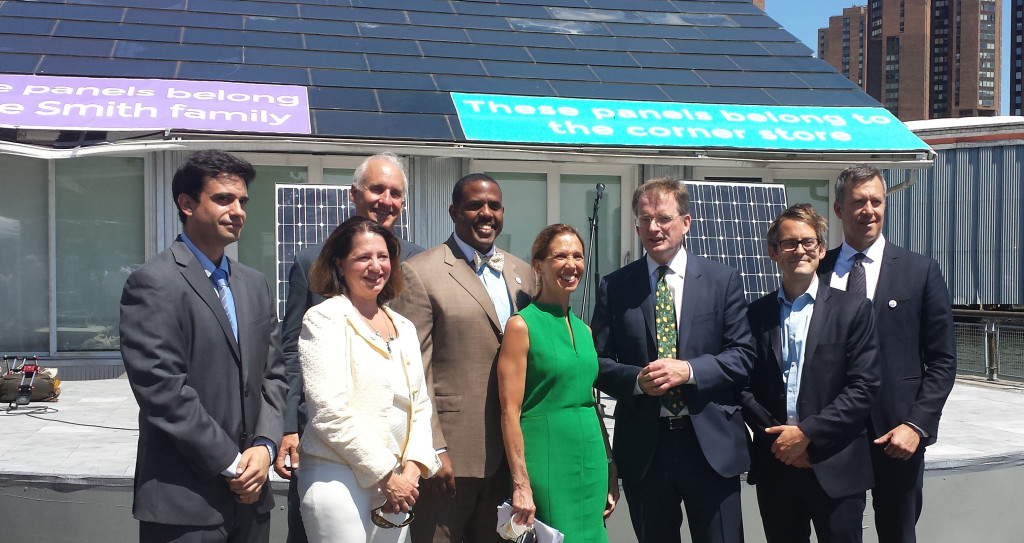 “Here comes the sun, here comes the sun and I say, it’s alright.” – George Harrison
 According the the Center for Disease Control and Prevention, childhood obesity has more than doubled in children and quadrupled in adolescents within the past 30 years. Enter the National Farm to School Network, which is working to bring local, fresh foods to school across the U.S., in an effort to reduce obesity, and bring healthy food choices to cafeteria menus. My guest this week is Jaime Lockwood, Development Director at the Farm to School Network, which helps connect local farmers with schools, chefs to cafeterias, and students to gardens. We talk about the importance of the Farm to School Act of 2015, and discuss how chefs inspire healthy eating, environmental awareness, and fitness via
 A river runs through it, and it is up on the roof. Tune in to find out how my guest Gennaro Brooks-Church, Director of EcoBrooklyn, created a river on a roof, which uses gray water and rain water filtration systems to cut down on water use, while creating a beautiful waterscape. We also discuss ways to keep your home more energy efficient, by using less waste, via reusable materials and installing passive heating and cooling systems. Water is a precious commodity, and we talk about the sewage/water issues affecting the neighborhoods closest to the Gowanus Canal. Gennaro is building green to keep his “Build It Forward” mantra alive for future generations. For more info go to www.ecobrooklyn.com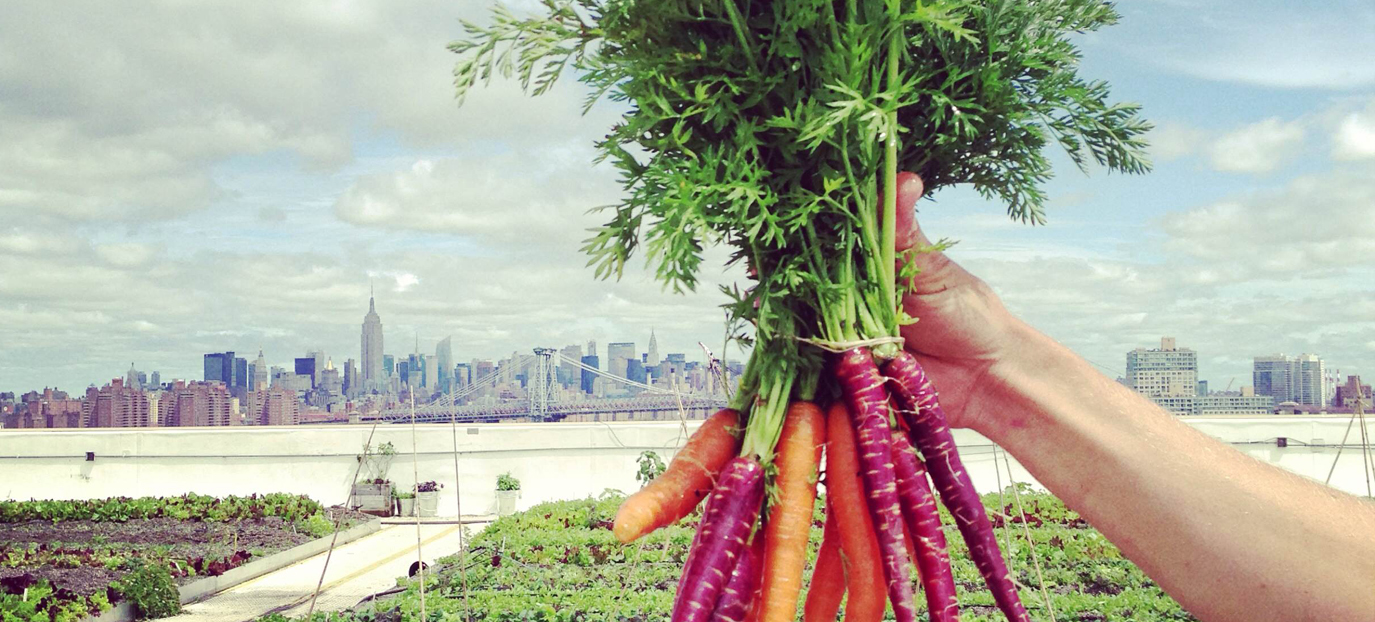
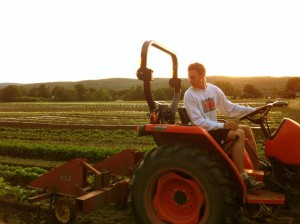 Learn what you can grow Up On The Roof, as Bradley Fleming, Farm Manager at Brooklyn Grange Farm explains how urban agriculture is taking hold on a tall building near you. Find out what grows best on a city roof, and how it helps both the environment and adds to the sustainability of NYC. Go to www.brooklyngrangefarm.com for more info.
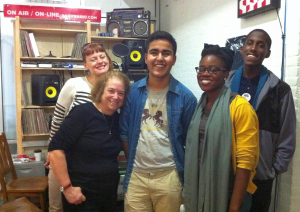 In Part 2 of our discussion with Global Kids, Makayla Comas touches on water issues, environmental technologies and how her experience in Chile brought her to be even more in tune with nature and what we need to do to improve conditions throughout the globe. Amosh, Sam and Molly discuss the Green Roof Project and the successful implementation of a “green roof” on William Cullen Bryant High School. Global Kids continue to lead the way on the importance of the need to protect the environment, as it interconnects with social justice issues and human rights. The student leaders are passionate, caring and are truly a breath of fresh air. For more information check out the website www.globalkids.org