 At times, I pile the bags of food in my car after spending a boatload of money and feel lost. With all my research and knowledge of the world of organics, I should radiate confidence. Instead, I doubt my choices and wonder if I even make a difference in what I feed my family.
Back in the store, I gazed upon the simple choice of cookies. With food allergies and touchy digestive issues for my kids, I can spend time laboring over even the simple choice of which animal cracker I should choose. Do I buy the kind without sugar? If so, what other kind of sweetener does it have? Is it organic? Gluten-free? Loaded with food dyes? Preservatives? GMOs? Is it local? The days of walking out to the barn to get the milk is gone for most of us. Now, we rely on a chain of people, machines, and often corporations to bring us our food. Instead of a place to nourish my family, stores feel like science labs – the joy of life squeezed right out of it.
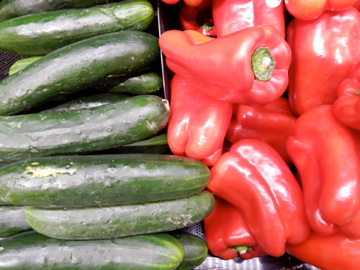
Avoiding one toxic choice feels like bowing down to another. I’d like to always buy organic and planet-friendly for my kids and not stumble over ingredients I often cannot pronounce. The word organic gives me hope that there are fruits and vegetables still glistening with nutrition. Then, I look at the prices: a single cucumber is $2.29. $2.29? Each? The other cucumbers are $.79 each. Yet I remember (from all my research) that cucumbers are one of the most chemically sprayed crops. When I go back to the bin of organic cucumbers, I wonder about the plastic each cucumber is wrapped in: Isn’t that bad for the environment? The conventional cucumbers feel waxy. But just one cucumber for $2.29?! One won’t last the whole week! It’s my kids’ favorite vegetable. And it’s so nutritious! Which one should I buy? After only being in the store for five minutes, I was exhausted. This shouldn’t be how we have to buy food.
We’ve polluted our planet and can’t eat our foods without loads of labels warning us what the food does and does not have. We can’t drink the water unless it is filtered or eat the fish unless it is found in the right waters.
Whether organic or not; whole grain or gluten-free, vegan or vegetarian, we’ve got to eat. I have to find a place where food is happy again. I’ve put down my food-battle sword and written a seal of peace on my shopping list. I eat organic whenever I can. I eat as little sugar as I can. I eat greens more than anything else. I stay within budget without beating myself up. I let it go when eating with others so as not to be a know-it-all or worrywart about the food contents.
Most of all, I relax and give thanks for every bite I take and am able to give my children. No food is any good unless it is served with joy.
 Be Kind to Animals, Don’t Be Cruel, Eat Your Veggies. All these phrases come together on this week’s program, as we celebrate vegetarian cuisine and cruelty free living at the New York City Vegetarian Food Festival. We spoke with Zoe Weil, Co-founder and president of the Institute for Humane Education, Nora Kramer, Founder and Executive Director of YEA (Youth Empowerment Action) Camp, Annie Hauck Lawson, Founder of Brooklyn Mompost, Susan Hargreaves, Founder of Animal Hero Kids, and Isis Phillips, Executive Director of Indy Kids. It was a pleasure speaking with all this dynamic and amazing women, who do so much to make the world a better place. For more information on these organizations go to
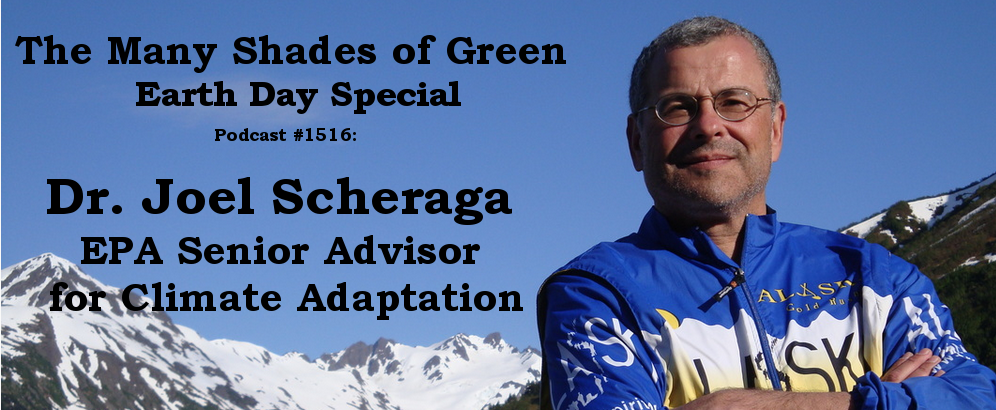
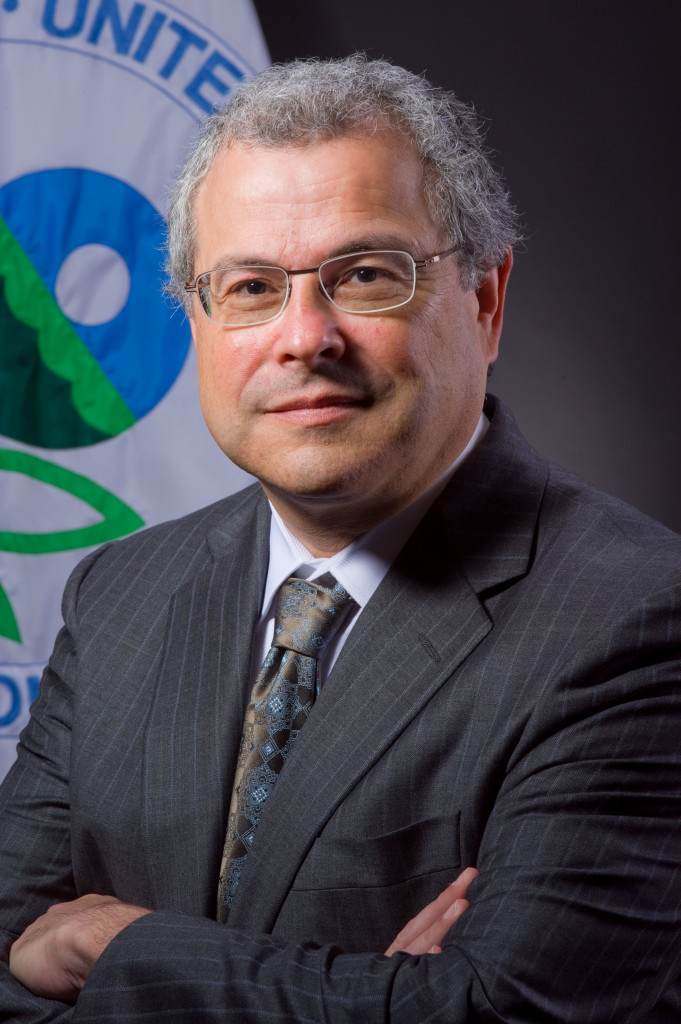 The First Earth Day took place on April 22,1970 and on this week’s episode, we celebrate the 45th Anniversary of Earth Day, as well as the 45th year of the EPA, with special guest, Dr. Joel Scheraga, Senior Advisor for Climate Adaptation at the U.S. Environmental Protection Agency. The climate is changing, and we have to adapt to the results of those changes, which are coming in the form of more intense weather, super storms, droughts, pollution, and an increase in greenhouse gas emissions. The change in climate is causing the oceans to get warmer, and
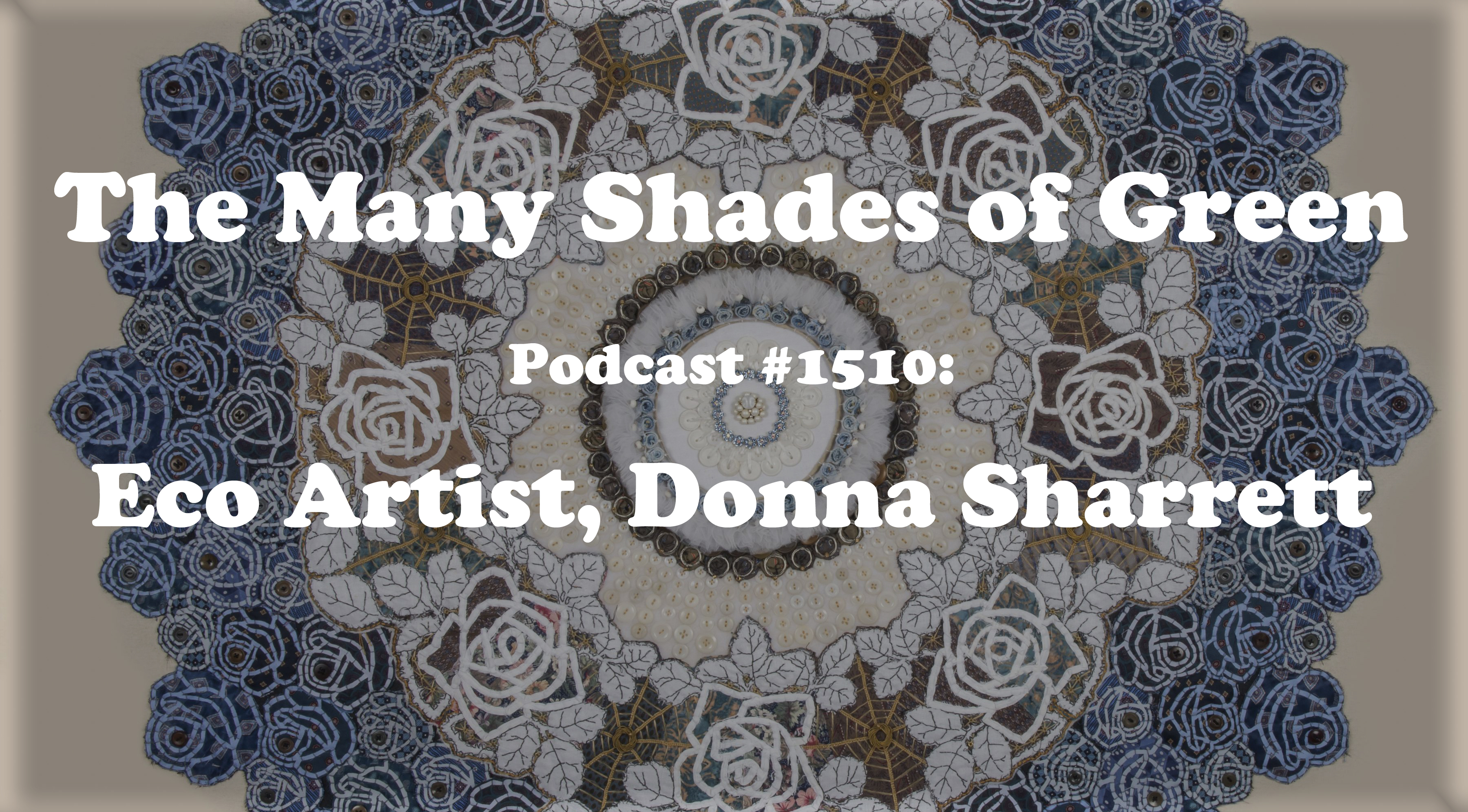
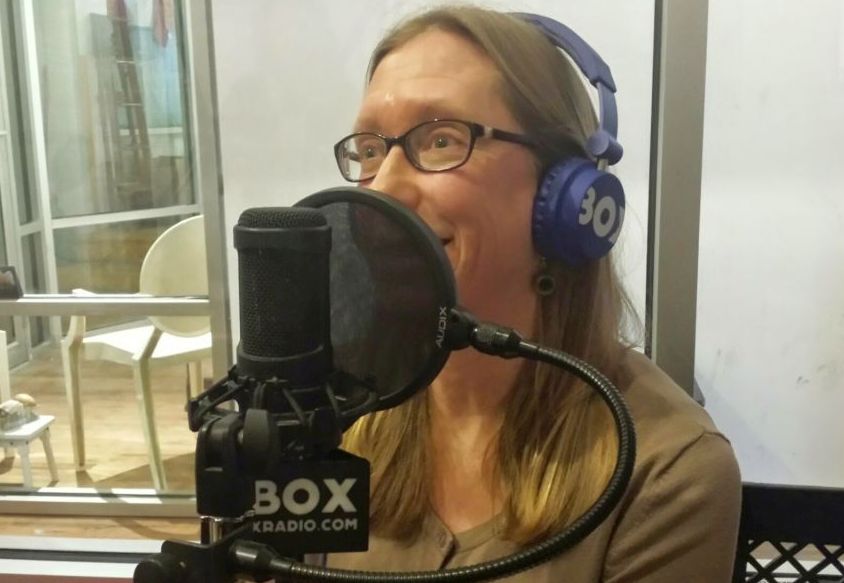 My guest this week is the multi-talented artist Donna Sharrett, whose most recent exhibit, Love Songs, captivated art lovers with a beautifully crafted array of pieces that were intricately assembled using materials donated and re-used. This collection of artwork was formed from Donna’s memories, as she re-used fabric, jewelry, dirt, guitar strings and other items to create these beautiful pieces. We also talk about how Patti Smith was in some small way part of the exhibit via her song, Dancing Barefoot. Donna is also a master gardener and started the Community Garden in Ossining, NY. Art and the environment are interconnected, and Donna is a prime example how that connection is made. For more information go to
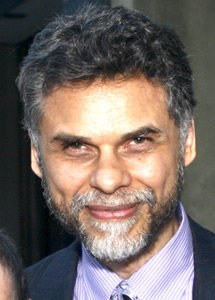 We are all interconnected to one another, yet the cultural mindset continues to focus on the me, rather than the we. My guest this week, Rick Ulfik, founder of We the World, is moving to change the paradigm by promoting awareness of the need for creating a more humane spirit, by enlisting change agents from around the globe, to build a more peaceful, sustainable and empathetic world. We the World works to develop global networks of collaboration via the 11 Days of Global Unity, and 11 Ways to Change the World. It’s time for the collective will of the citizenry to use the power of WE! For more information go to
 Many species are in decline because of climate change. In Part 2 of our talk with Bonnie Wyper, President and Executive Director of Thinking Animals, we discuss what actions can be taken to help stop the destruction of animal habitats due to urban sprawl, air and water pollution, as well as poaching (especially in the ivory trade). Big Ag farms treat animals with little regard to their emotional feelings. Cattle, chickens and pigs are penned up and/or caged with no room to move around, and are led to slaughter in cruel and inhumane conditions. There are ways to change our behavior to stop the destruction of animal habitats, and to work to make life better for the non-human creatures who inhabit the Earth. As humans, we must do better, and we must create a world fit for all the inhabitants of the planet. Conservation is key to making that happen. Go to
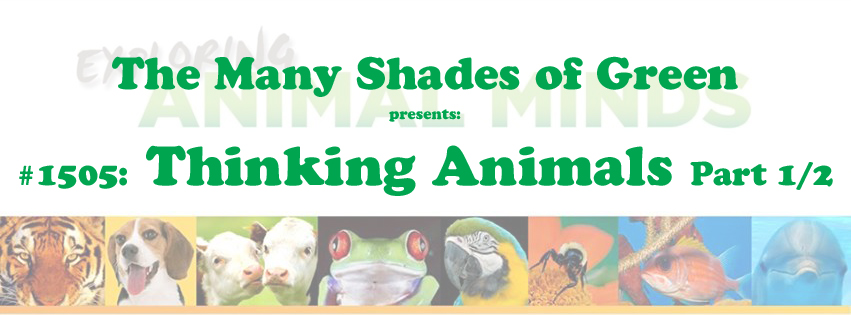
 If we could talk to the animals, just imagine it, chatting to a chimp in chimpanzee, imagine talking to a tiger, chatting to a cheetah, what a neat achievement that would be. In Part 1 of my talk with Bonnie Wyper, President and Director of Thinking Animals, we delve into the topic of animal behavior and cognition. Charles Darwin once said that “Evolution is not just the physical body, but our emotional sides as well.” Bonnie and I discuss how animals experience joy, stress, thought and nuance, and are more complex than humans know. Most humans think of themselves as superior beings, and species are being decimated because of that thought process. We need to step up and treat all creatures humanely. For more information go to
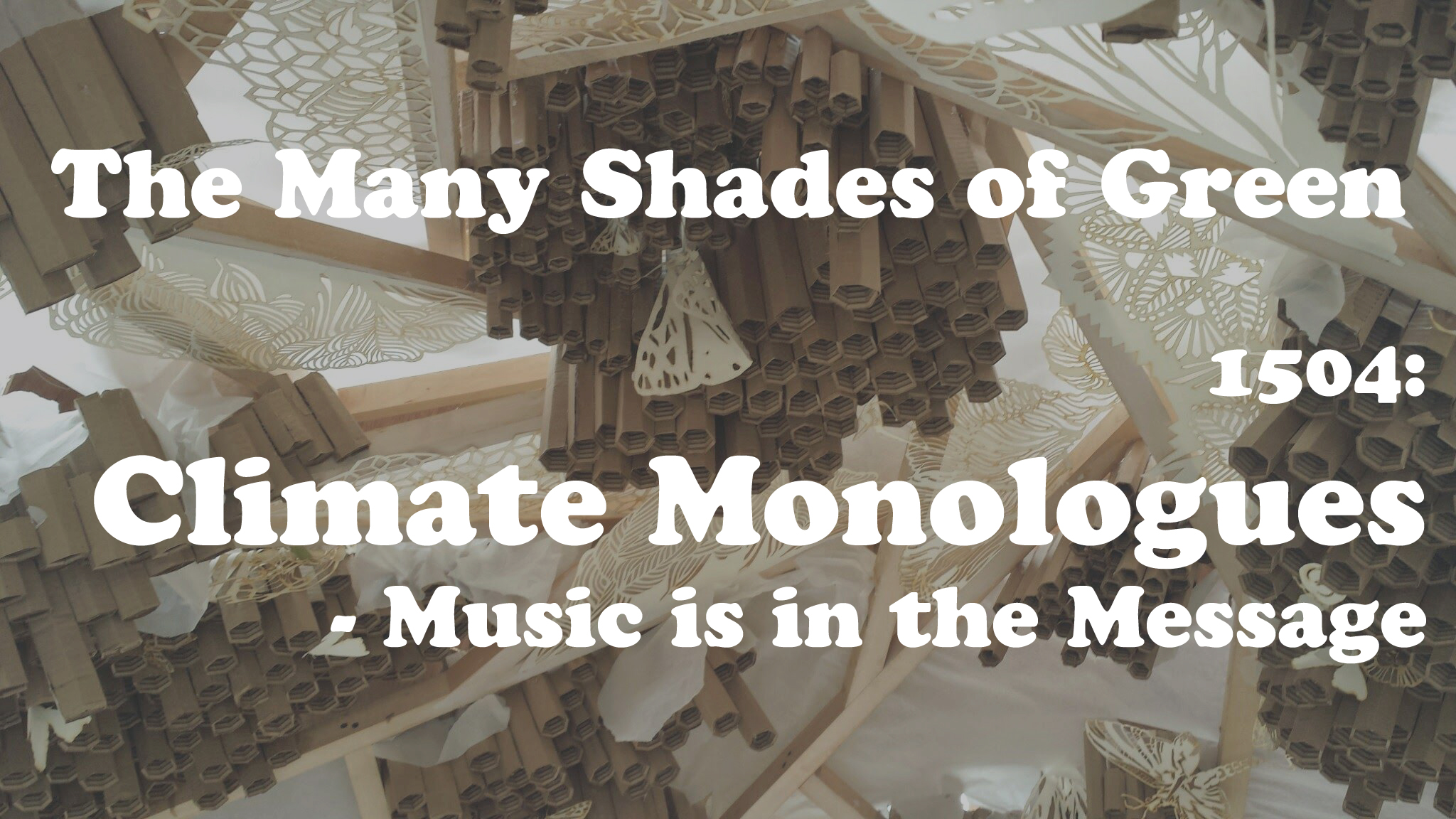
 Music is the message, and my guest this week, Sharon Abreu, creates musical shows and programs that help educate people about the environment. She uses multimedia platforms as a tool to get the green message out, and as Executive Director of Irthlingz, she combines entertainment and music with education, to bring issues of sustainability to the forefront. Pete Seeger and Ray Korona are smiling from above, knowing that Sharon is carrying the torch to create activism through music. For more information please visit
 We welcome back friend of the show, and a super green human, Eva Radke, founder of Film Biz Recycling, an organization that diverts set materials from film, television and theatre, and recycles, reuses, redistributes and re-purposes those items. “Not in a Dumpster” is the mantra of Film Biz Recycling, and there are exciting new projects which are on the horizon for the coming year. The prop shop is a great place to find clothes, furniture and collectibles that have been used to dress sets such as 30 Rock, Gossip Girls, The Amazing Spiderman 2 and many more. To find out all the great things
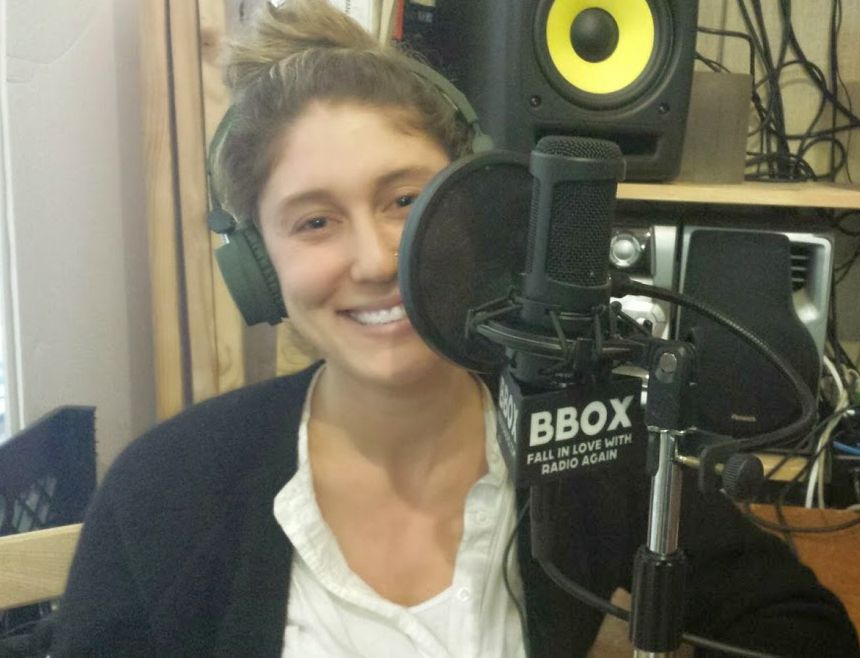 When your mom yelled “eat your veggies” she was definitely on to something. My guest this week is Ashley Spivak, Director of Restaurant Guides at Clean Plates. We discuss the importance of a well balanced, plant based eating regimen, that will lead to a healthier you. An 80/20 diet of 80% good stuff (vegetables, fruits, whole grains and protein), and 20% of the foods that make you smile (pie, cookies, mac and cheese) is a good formula to follow. Bio-individuality indicates that there is no right way to eat, not every person is the same, and diets and food choices affect different body types in different ways. The Clean Plates Food Guide lists restaurants that are more conscious about where they source their produce, meats, grains, as well as the taste of the food, the prep and the atmosphere. Making informed choices whether eating out or in is essential to being a healthier, smarter and cleaner eater. For more info about Clean Plates online publications, guides, phone apps and recipes, go to