This episode starts off with the TV theme song from The Big Bang Theory which is officially titled “The History of Everything”. It was written and recorded by the Canadian rock band Barenaked Ladies. The history of the song started when the show’s creators, Chuck Lorre and Bill Prady, asked the band to write a song explaining the entire history of the universe. Lead singer Ed Robertson wrote the lyrics from scratch in just about an hour. The track is famous for its rapid-fire, high-energy delivery of scientific milestones, covering everything from the Big Bang to the dawn of civilization.
Our whole universe was in a hot, dense state
Then nearly fourteen billion years ago expansion started, wait…
The earth began to cool, the autotrophs began to drool,
Neanderthals developed tools,
We built the wall (we built the pyramids)
Math, science, history, unraveling the mysteries,
That all started with the Big Bang!
We take for granted the amazing creations brought to us by science. Throughout history, scientific discoveries have transformed societies, increased life expectancy, improved living standards, and expanded our understanding of everything from the tiniest particles to the vastness of the universe. Yet today, science often finds itself at the center of public debates about education, health, technology, and public policy.
The recent Artemis II moon mission brought science to the forefront, as people focused on the amazing crew and the tremendous effort of the astronauts, scientists, technologists and everyone who participated in the project to make it a success. Kids became infatuated with the mission and began to take a greater interest in science. So why does science matter? We cannot ignore science as to surrounds us daily in every aspect of life. Scientific literacy is essential in a democratic society and scientific expertise must not be ignored. Millions of people carry around an amazing device which fits in their pocket and connects them to a world of information. That amazing device the is the cell phone, and people take for granted the scientific research that went into producing it.
The cell phone was invented by integrating centuries of scientific discoveries in electromagnetism, computing, and battery chemistry. It turns your voice into radio waves, routing them across a grid of towers, and shrinking massive circuits to fit in your hand held device. Science produced Rechargeable Battery Chemistry to charge your cell phone. It is interesting to note that Hollywood actress and scientist Hedy Lamarr invented the foundational technology for Wi-Fi. During World War II, she co-created a “frequency-hopping” radio system with composer George Antheil. This spread-spectrum technology prevented radio signals from being jammed and directly paved the way for modern Wi-Fi, Bluetooth, and GPS. Scientific advancement made cell phones possible, without them we would all be tied to a wall.
Not only is the the smartphone in your pocket based on science, GPS navigation, weather forecasting, medical imaging, renewable energy technologies, and life-saving pharmaceuticals are only possible by the work of scientists and researchers working for the better good. Many of these innovations originated from government-supported research programs.
Science helps determine whether our drinking water is safe, whether medications are effective, whether bridges stand, and whether crops survive drought. Climate change must be addressed, as it affects millions of people. Extreme weather is happening at a faster rate, and communities have to prepare for more floods, hurricanes, and wildfires. The United States has been a global leader in scientific discovery. Federal investments in research helped create lifesaving medicines, advanced technologies, and countless innovations that fuel our economy. But many scientists now warn that America’s scientific enterprise is facing unprecedented political and financial pressure. Research funding has been reduced, advisory panels have been eliminated, grants have been canceled, and concerns are growing that politics is increasingly influencing scientific decision-making. Scientists, universities, and organizations across the country are raising alarms about what they see as an erosion of scientific independence.
Joining us on this episode of TMSOG is Julie McNamara, the Federal Energy Policy Director with the Climate & Energy program at the Union of Concerned Scientists. Julie’s research focuses on policies and measures that facilitate a rapid transition of our nations energy system. She holds an MS in technology and policy from MIT and a BA in biology and political economy from Williams College. Julie has been quoted widely in the Associated Press, Inside Cimate News, the LA Times, NPR and more. We discuss AI Data Centers, the repeal of the Endangerment Finding, the Chevron Deference, and the current climate of science in the US. We need to support the science community in these chaotic times. Science matters!
For more info go to Union of Concerned Scientists at https://www.ucs.org/
To help defend democracy please donate if you can to help lawyers defend our constitution by going to: https://www.aclu.org/ https://www.brennancenter.org/ https://libertyjusticecenter.org/ and https://civ.works/defend
To help protect the environment visit and please donate to https://earthjustice.org and https://action.nrdc.org/ Help save a forest by going to https://www.preservebuttonhook.org/
To listen to past TMSOG shows go to: https://hudsonriverradio.com/ https://malcolmpresents.com and https://themanyshadesofgreen.com/ Follow The Many Shades of Green on FB, Threads and Instagram @tmshadesofgreen and on Blue Sky @tmshadesofgreen.bsky.social. Listen to TMSOG podcasts on all major podcast apps.#RaiseYourEco&SocialConsciousness. A shout out to Neil Richter for all his engineering wizardry getting TMSOG out.

 Electric cars are cool, electric cars are fun, electric cars don’t pollute the air we breathe, so why aren’t there more of them on the road? My co-host Brian Horowtiz and I chat about this and other topics, with my guest Seth Leitman, Green Living Guy. Seth is an EV car aficionado, and author of a series of books called the Green Guru Guides. He is working with the Solarize initiative in Westchester County to promote solar energy. Seth will be lecturing and touring colleges this Spring, to spread the word about green living. For more information go to greenlivingguy.com
 Why are environmental regulations important in helping reduce greenhouse gas emissions? The Clean Air Act and the Clean Power Standard Rule have been put into place to keep the air, land and water safe, in order to reduce the negative health effects of pollutants. Join me and my special guest, Elon D. Rubin, Esq., Environmental lawyer, entrepreneur, techie, musician and most importantly my awesome son, as we talk about the environmental regulatory process, and how citizens can participate in the process. The climate is changing, and we must be proactive in being resilient and adaptive to current and future climate challenges. For more information visit Edrlaw.com and epa.gov.
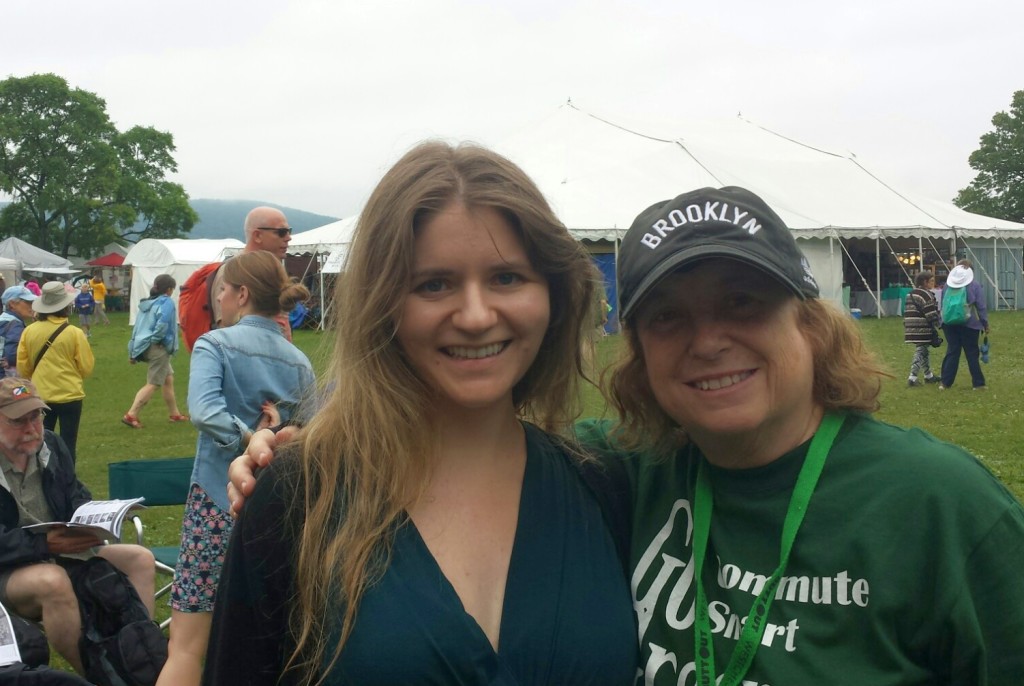 Neither rain, nor fog, nor soggy dew could dampen the spirit of the Clearwater 2015 Festival. We spoke to many environmental activists and green entrepreneurs who are creating ideas, and spreading the message about the need to be proactive stewards of Mother Earth. Music echoed throughout the festival, with many performers motivating the populace to take a stand and raise their voices on environmental and social justice issues. Music icon David Crosby, sang new songs with lyrics that commented on the nation’s current state of affairs, and implored people to email, call or show up at the offices of their elected officials and make some noise. Pete Seeger would have been proud to see his vision perpetuated. For more info go to
 This week’s program takes place at the Bedford 2020 Summit and Solar Action Day. We spoke to Andrew Revkin, writer of the Dot Earth Blog for the New York Times, as well as Peter Olmsted, East Coast Regional Director for Vote Solar. We also spoke to Mayor Michael Cindrich of Mt. Kisco, NY about the solar projects on his agenda. Keynote Speaker Amory Lovins, of The Rocky Mountain Institute, spoke about new energy technologies that are on the horizon for the future of electricity. It was a gathering of innovators, educators and community, all working to promote solar and other renewable energy, in an effort to help create actionable solutions to green house gas emissions. A special thank you to Heather Flournoy for her hard work and hospitality. For more information go to