
 We are all interconnected to one another, yet the cultural mindset continues to focus on the me, rather than the we. My guest this week, Rick Ulfik, founder of We the World, is moving to change the paradigm by promoting awareness of the need for creating a more humane spirit, by enlisting change agents from around the globe, to build a more peaceful, sustainable and empathetic world. We the World works to develop global networks of collaboration via the 11 Days of Global Unity, and 11 Ways to Change the World. It’s time for the collective will of the citizenry to use the power of WE! For more information go to We.net
#1507: Eco-Thriller Author, Jenny Milchman
 Join me and my guest, author Jenny Milchman as we talk about her new Eco-Thriller, “RUIN FALLS”, which combines family suspense with environmental undertones. Jenny and I discuss how she interconnects issues of sustainability within the context of her writing.
She is also the founder of Take Your Kids to a Bookstore Day, and Jenny has a third book coming out later this year entitled “As Night Falls”. As special bonus, the first listener that contacts us via our Facebook page with the name of the town the main character lives in, which also appears in her previous book “Cover of Snow” and reappears in “Ruin Falls” will win an autographed copy of “Ruin Falls”. Visit jennymilchman.com to get more information about her books and Take Your Child to a Bookstore Day.
#1506: Thinking Animals part 2/2
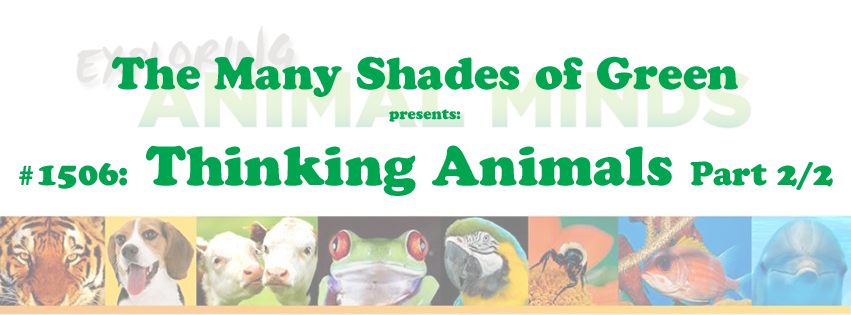
 Many species are in decline because of climate change. In Part 2 of our talk with Bonnie Wyper, President and Executive Director of Thinking Animals, we discuss what actions can be taken to help stop the destruction of animal habitats due to urban sprawl, air and water pollution, as well as poaching (especially in the ivory trade). Big Ag farms treat animals with little regard to their emotional feelings. Cattle, chickens and pigs are penned up and/or caged with no room to move around, and are led to slaughter in cruel and inhumane conditions. There are ways to change our behavior to stop the destruction of animal habitats, and to work to make life better for the non-human creatures who inhabit the Earth. As humans, we must do better, and we must create a world fit for all the inhabitants of the planet. Conservation is key to making that happen. Go to thinkinganimals.org to find out how you can help.
#1505: Thinking Animals part 1/2
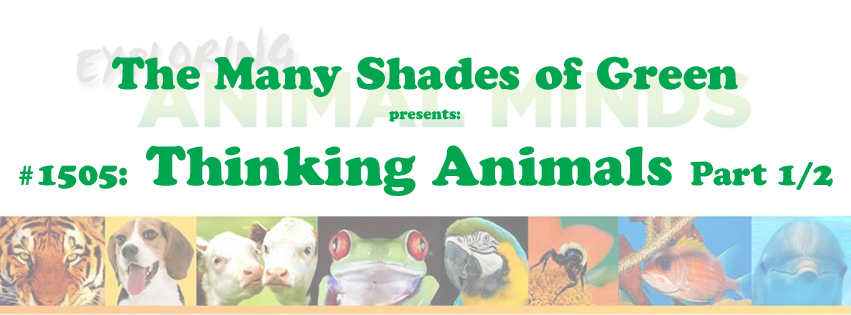
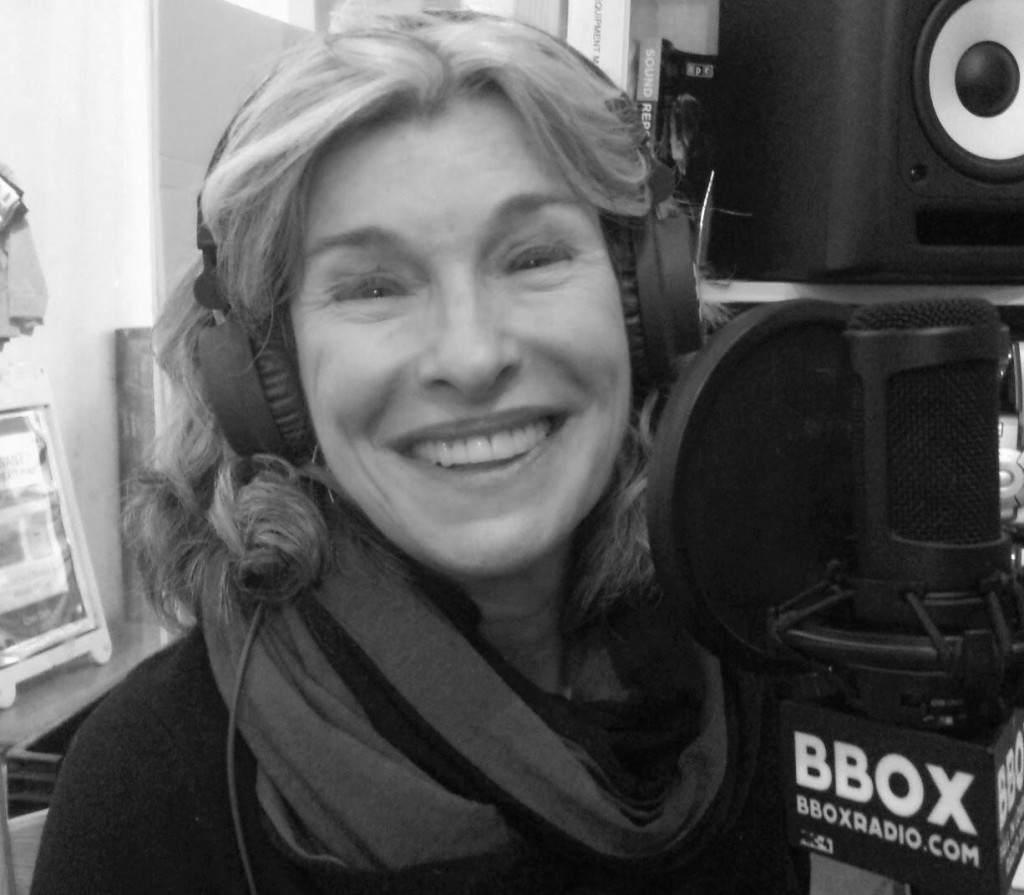 If we could talk to the animals, just imagine it, chatting to a chimp in chimpanzee, imagine talking to a tiger, chatting to a cheetah, what a neat achievement that would be. In Part 1 of my talk with Bonnie Wyper, President and Director of Thinking Animals, we delve into the topic of animal behavior and cognition. Charles Darwin once said that “Evolution is not just the physical body, but our emotional sides as well.” Bonnie and I discuss how animals experience joy, stress, thought and nuance, and are more complex than humans know. Most humans think of themselves as superior beings, and species are being decimated because of that thought process. We need to step up and treat all creatures humanely. For more information go to thinkinganimals.org
#1504: Climate Monologues – Music is in the Message
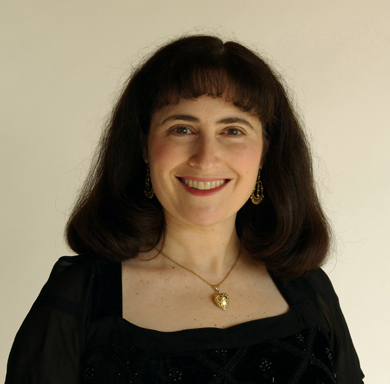 Music is the message, and my guest this week, Sharon Abreu, creates musical shows and programs that help educate people about the environment. She uses multimedia platforms as a tool to get the green message out, and as Executive Director of Irthlingz, she combines entertainment and music with education, to bring issues of sustainability to the forefront. Pete Seeger and Ray Korona are smiling from above, knowing that Sharon is carrying the torch to create activism through music. For more information please visit irthlingz.org or ClimateMonologues.com.
#1503: Raising Veg Kids
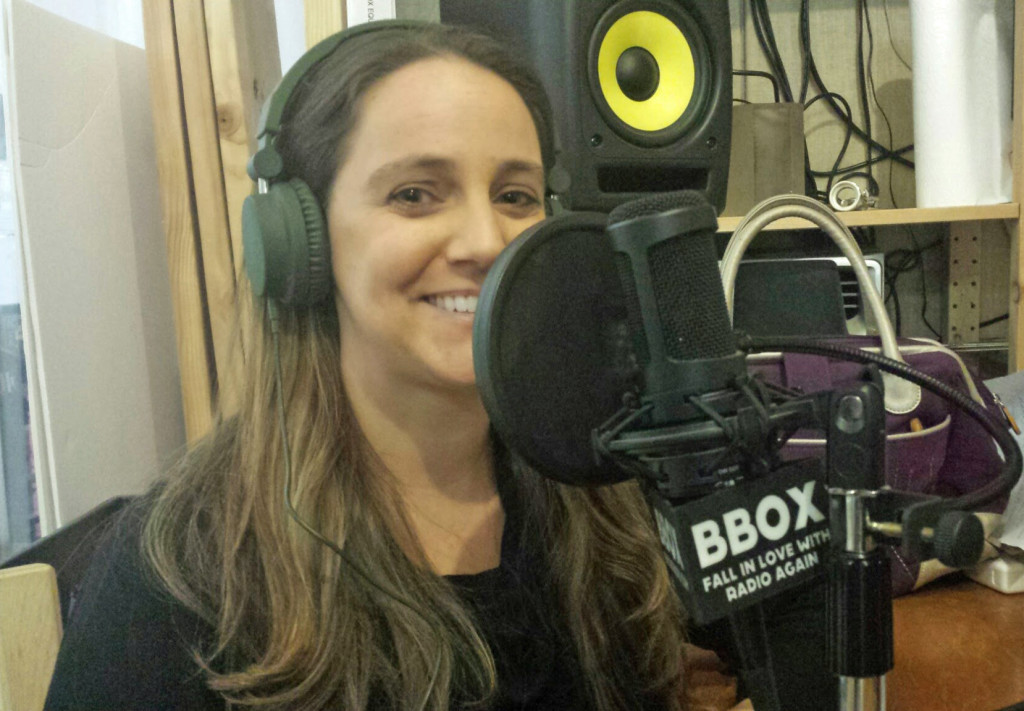 My guest this week is Robyn Moore, creator of RaisingVegKids.com and Family Coordinator for Education for the Solutionary School, which is set to open in NYC in 2016. Education is the key to preparing students to be more ethical and humane, as our culture needs to create problem solvers and thinkers. Part of that process is teaching children and their parents to be stewards of the planet, and to eat a cleaner, more plant based diet, which will lead to a healthier society. Whether vegan, vegetarian, or paleo, balance is an essential part of eating and living. For more information go to raisingvegkids.com and humaneeducation.org
#1502: Not in a Dumpster
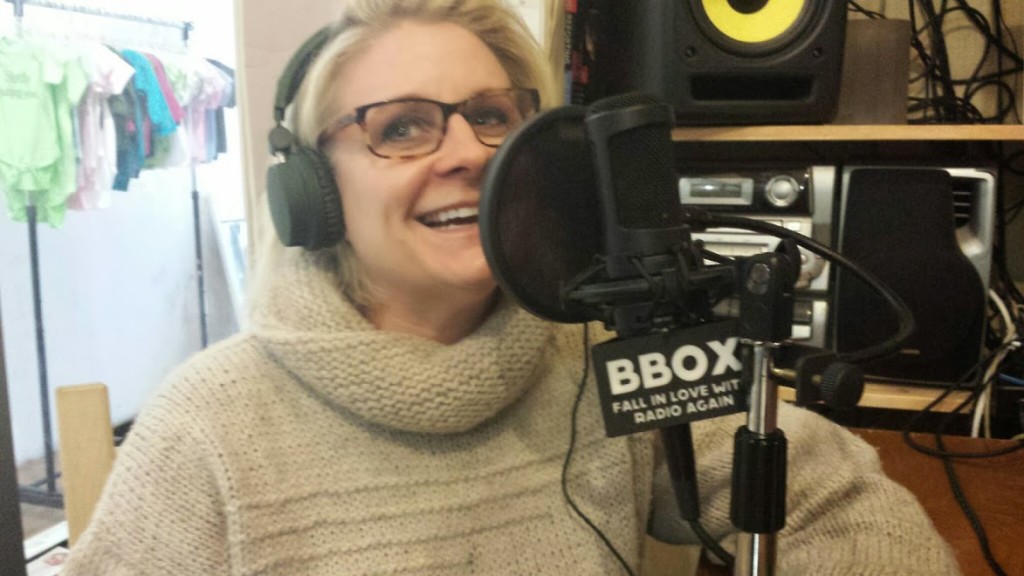 We welcome back friend of the show, and a super green human, Eva Radke, founder of Film Biz Recycling, an organization that diverts set materials from film, television and theatre, and recycles, reuses, redistributes and re-purposes those items. “Not in a Dumpster” is the mantra of Film Biz Recycling, and there are exciting new projects which are on the horizon for the coming year. The prop shop is a great place to find clothes, furniture and collectibles that have been used to dress sets such as 30 Rock, Gossip Girls, The Amazing Spiderman 2 and many more. To find out all the great things Film Biz Recycling is doing, and to get information about the prop shop, go to filmbizrecycling.org
#1501: Eating Healthy Made Easy

 When your mom yelled “eat your veggies” she was definitely on to something. My guest this week is Ashley Spivak, Director of Restaurant Guides at Clean Plates. We discuss the importance of a well balanced, plant based eating regimen, that will lead to a healthier you. An 80/20 diet of 80% good stuff (vegetables, fruits, whole grains and protein), and 20% of the foods that make you smile (pie, cookies, mac and cheese) is a good formula to follow. Bio-individuality indicates that there is no right way to eat, not every person is the same, and diets and food choices affect different body types in different ways. The Clean Plates Food Guide lists restaurants that are more conscious about where they source their produce, meats, grains, as well as the taste of the food, the prep and the atmosphere. Making informed choices whether eating out or in is essential to being a healthier, smarter and cleaner eater. For more info about Clean Plates online publications, guides, phone apps and recipes, go to cleanplates.com
#1450: New Year’s Eve Special
 Raising Veg Kids’ Robyn Moore and Dom Gervasi of Made in Brooklyn Tours tell us why it’s important to buy local, and enjoy the flavors of products made in Brooklyn.
Eating well is a good resolution for the New Year, and Robyn’s blog RaisingVegKids.com gives you the information needed to make healthier food choices.
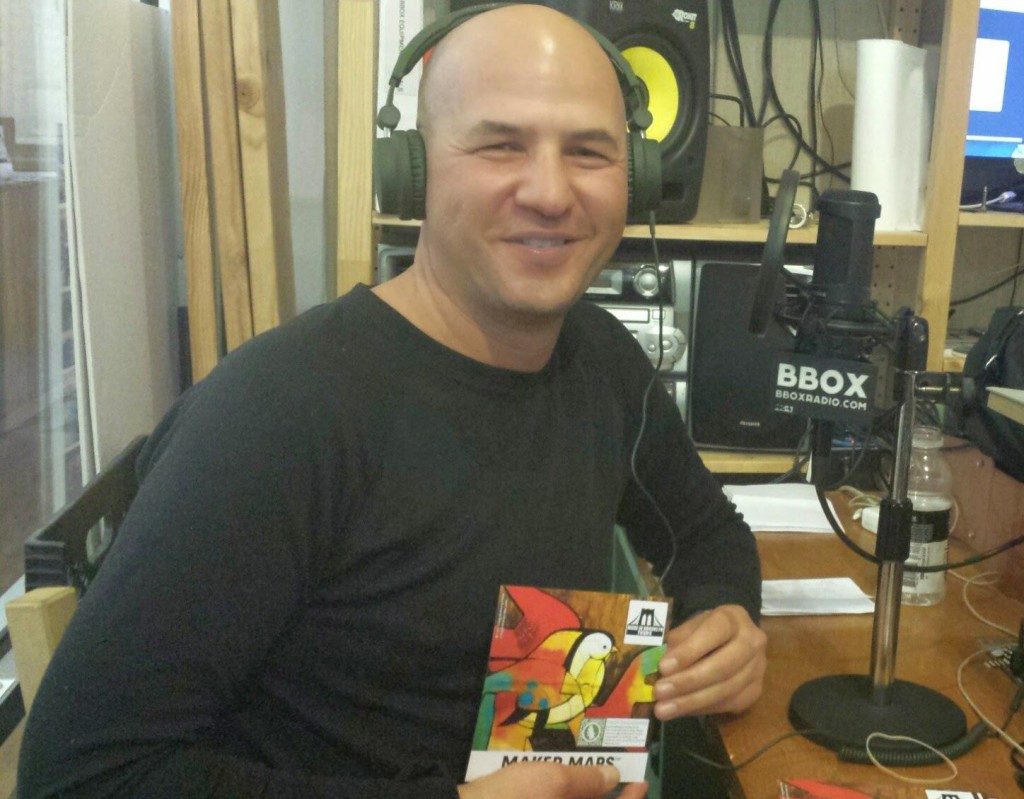 Dom will take you on tours of places in Brooklyn where various items are made local, and where food is prepared fresh daily. Since Made in Brooklyn tours are walking tours, you get exercise, as well as the feel of many neighborhoods and landmarks which make Brooklyn such a special place.
For more information go to MadeinBrooklynTours.com and Raisingvegkids.com
#1447: Holiday Wishes

We bring you tidings of joy, music and all things green with our Holiday Special. Merry, Merry and Happy Happy Joy, Joy!! May the spirit of the holidays continue to spread throughout the New Year.
Sending Peace, Love, and Zen vibes from The Many Shades of Green Team…..Maxine, Abba, Brian and Mikey!
Victory or Failure at Lima COP 20?
 By
By There is no time to waste on Climate Change, so I will dive right into this week’s post! According to this United Nations Press Release, the COP 20 climate talks held in Lima, Peru earlier this December were intended to “Build on New York City’s UN Climate Summit of September of 2014” after the #PeoplesClimateMarch. The talks that center around the UN’s Sustainable Development Goals, or SDG’s, seem simple enough when you take a look (Please check them out!). However, they are ideals that run into real world complications from corporate and political interests which often compete with environmental and humanitarian needs. My goal in blogging to you, dear reader, is to summarize how some of these complications relate to 2014’s COP 20 results and the future of international climate negotiation.
According to the UN Press Release, there have been concrete accomplishments that set the stage for next year’s Climate Summit in Paris. Naturally, the UN is going to say positive things about their own conference, so their boastings need to be taken with a few grains of salt.
One such area of contention that seems to be sugar coated is the global commitment to financing the mitigation of climate change. Apparently for the first time ever, total assets of the Green Climate Fund were measured at around $10.2 billion US dollars. This is in response to the pledge of industrialized nations to raise $100bn by 2020 for “concrete mitigation actions“, which was agreed upon in the Cancun Conferences of 2010. Although this sounds like good news, it is still unclear if these industrialized nations are taking mitigation steps seriously. Are they just an effort to look good in front of the World? Is the money really being promised with a legitimate effort at mitigating climate change?
Ahmed Sareer, negotiator for the Maldives, voices his concern in a Guardian article saying, “There has been a clear commitment of $100bn a year but how are we really being offered? Even when they make those pledges how do we know how much is going to materialise? There is no point of knowing that behind the wall there is a big source of funds available unless we can reach it. We are told it is there in a nice showcase, but we don’t get to meet it. We don’t get to access it. These are difficult issues for us.”
Also, the Environment Minister of India, Prakash Javadekar, expressed his disappointment towards the developed nations pledge of $100 billion by 2020:
“We are upset that 2011, 2012, 2013 – three consecutive years – the developed world provided $10bn each year for climate action support to the developing world, but now they have reduced it. Now they are saying $10bn is for four years, so it is $2.5bn”
Although some aspects of the conference seem to be positive at a first glance, many times with UN Climate Conferences there is more to the story. Another self-proclaimed achievement of the COP 20 in Lima notes that many Latin American countries have submitted their carbon emissions measurements. The UN says this data would encourage funding for UN programs like REDD (Reducing Emissions from Deforestation and Forest Degradation) and allow them to sell off undeveloped forest regions for carbon offsetting. And although REDD is widely supported- even by Jane Goodall, who is seen as one of the world’s leading environmental activists- as a good solution to deforestation, there is serious controversy as to whether the organization helps to reduce deforestation and carbon emissions.
Anne Peterson, from the Global Justice Ecology Project, reveals in a Democracy Now! interview that ,“REDD is really — has been designed as a way for — and is being pushed by the United States — as a way for industries and Northern countries, industrialized nations, to avoid actually reducing their emissions at the source. So, countries and companies can continue polluting by saying that they’re protecting forests somewhere else that will supposedly sequester the carbon that they’re putting out into the atmosphere. Unfortunately, there’s absolutely no credible science behind the notion of offsets. So, in fact, what’s going to happen is, because they’re not reducing their pollution, because they’re not reducing their carbon emissions, global warming will continue, which will inevitably damage, destroy and completely eliminate forests.”
But proponents of REDD’s implementation say that it reduces emissions while respecting indigenous rights. Steve Zwick writes in his article in The AnthropoZine that “Indigenous people have traditionally been the best stewards of the forest, and well-run REDD Projects aim to harness this stewardship by partnering with them.”
Others disagree. Chief Ninawa Huni Kui, president of the Federation of the Huni Kui and an indigenous rights activist in Brazil, traveled to Lima for the COP 20 to voice the opposition of 10,400 indigenous Brazilians in 90 villages. In Amy Goodman’s interview, he says, “We are saying that the climate change proposals that the government is tabling here at the United Nations are false solutions to climate change. Specifically, we are here to denounce REDD—R-E-D-D, Reducing Emissions from Deforestation and Forest Degradation.” He states in the same interview that, “The impacts (of REDD) are the following: The community is no longer to fish in their own land, to cultivate food, to practice agriculture. All of these activities are banned and have been declared illegal, and people are jailed if they participate in agriculture or go fishing.”
So basically, the holistic goodness of REDD remains a controversy that is intricately woven with indigenous rights and international policy. Perhaps I will cover this controversy in depth at a later date, so until then, stayed tuned! I hope my words here spark your interest and participation in these climate change debates because they are shaping our future. The climate crisis is dire and needs real action. We at TMSOG want all the good-hearted people in the world to be informed so that hopefully we can have a unified political voice aimed at making the world a slightly better place to live in, if not for us, then for our grandchildren. As Dr. Emanuel Bronner, the magic soap creator, preached, “We are all One, or None!
#1449: Green Burials at Sleepy Hallow Cemetery
 How does the after-world connect to the green world? Why pollute when you are dead? Christina Orban-La Salle, Director of Programs, Tours and Visitor Services at the historic Sleepy Hollow Cemetery, famous for the tale of the Headless Horseman, is my guest this week, and we talk about a new trend for interment, “green” burials. Most common burials are harmful to the environment, as embalming fluids are toxic, and cement vaults and caskets are not earth friendly. There is now a movement to leave a better legacy by choosing a more natural burial, which is in tune with the harmony of the cycles of life, and is more spiritual, meaningful, and ecologically regenerative. It is a topic that most people shy away from, but it is important to integrate conservation and death care, in order to restore the natural earth. For more information about Sleepy Hollow Cemetery, and the River view Natural Burial Ground, go to sleepyhollowcemetery.org